How to turn leftover roasted vegetables into a satisfying lunch
· Editorial team detroitnewsdaily7.com
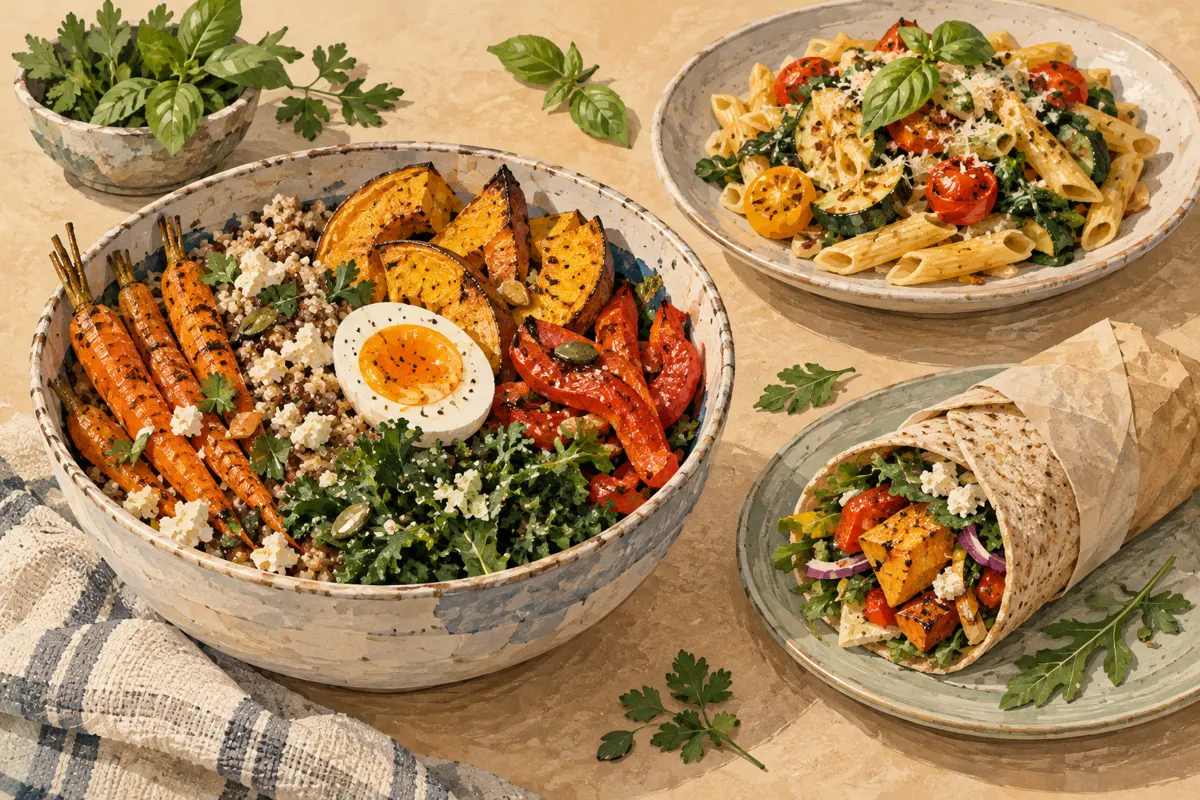
Turn leftover roasted vegetables into lunch by adding a substantial base, a protein source and something bright or crunchy. Tuck them into a hummus wrap, spoon them over rice with beans, or toss them with pasta and sauce. Choose the format that suits their texture: firmer pieces work well in wraps and bowls, while softer vegetables can become part of a pasta sauce.
Choose a lunch that suits your leftovers
The combinations below are editorial proposals, designed to adapt to what you already have. Start by looking at the vegetables’ size, softness and seasoning. Cut large chunks into bite-size pieces, and keep any roasting juices for a bowl or sauce rather than adding them to a wrap.
- For wraps, choose pieces that hold their shape and drain away excess liquid.
- For grain bowls, use a mixed assortment, including larger chunks of carrots, squash or cauliflower.
- For pasta, chop soft zucchini, eggplant or peppers finely so they mingle with the sauce.
- Match the additions to the original seasoning: lemon and herbs for a garlicky batch, or tomato sauce for vegetables with Mediterranean flavors.
Build a wrap with a creamy spread and crunch
A wrap gives a small quantity of vegetables a useful role. Hummus makes an easy starting layer; white bean spread is another option. Add chickpeas, tofu or cooked chicken if you want a more substantial filling. Keep the vegetables in a narrow strip so the tortilla can fold around them.
- Spread hummus over the center of a tortilla, leaving the edges clear.
- Add chopped roasted vegetables and your chosen protein.
- Top with shredded cabbage or crisp lettuce, then add a little lemon juice or a few chopped pickles.
- Fold in the sides and roll firmly. If packing lunch ahead, carry wet toppings separately and add them before eating.
Try roasted cauliflower and carrots with hummus, chickpeas and cabbage. For soft peppers and eggplant, use a modest amount of spread and avoid extra dressing: the filling already brings moisture.
Make a grain bowl with contrasting toppings
Rice, couscous, bulgur or quinoa can provide the base for a vegetable bowl. Fit Men Cook offers a roasted-vegetable rice combination with lemon zest, herbs and pine nuts, a useful example of adding freshness and crunch to a soft base. Use that approach with whichever grain you have.
- Spoon your prepared grain into a bowl and add the roasted vegetables.
- Add cooked lentils, canned beans, tofu or another ready-to-eat protein.
- Stir lemon juice into tahini with enough water to make a pourable dressing, then drizzle it over the bowl.
- Finish with chopped herbs and toasted seeds or nuts, keeping the crunchy topping separate until serving.
One proposed combination is squash, lentils and bulgur with lemon-tahini dressing and pumpkin seeds. If the vegetables include plenty of potatoes, use less grain and add more beans or greens to vary the bowl.
Fold softer vegetables into quick pasta
Pasta is a practical choice when the vegetables have lost their crisp edges. Instead of trying to restore that texture, chop them and work them into the sauce. Tomato sauce suits eggplant, peppers and zucchini; olive oil, lemon and Parmesan offer another proposed direction for broccoli or cauliflower.
- Cook pasta according to its package instructions, reserving a little cooking water before draining.
- Warm tomato sauce in a skillet, then add chopped roasted vegetables and canned white beans.
- Fold in the pasta gently, adding cooking water a splash at a time until the sauce coats it.
- Finish with parsley, basil or grated cheese. Add chili flakes if you want heat.
Adjust flavor and texture before serving
Taste the assembled lunch before adding more salt or oil, since the vegetables were seasoned during roasting. Make one adjustment at a time so you can tell what helps.
- Too soft: add cabbage, seeds, nuts or another crisp topping just before eating.
- Too dry: add a little dressing, spread or pasta cooking water, depending on the dish.
- Too rich or sweet: try a small squeeze of lemon or a few pickled onions.
- Too sharp: soften the flavor with hummus, tahini or a spoonful of plain yogurt.
- Too crowded with flavors: leave out an extra topping and let the original vegetable seasoning guide the meal.