How to sort kitchen scraps for a community compost drop-off
· Editorial team detroitnewsdaily7.com
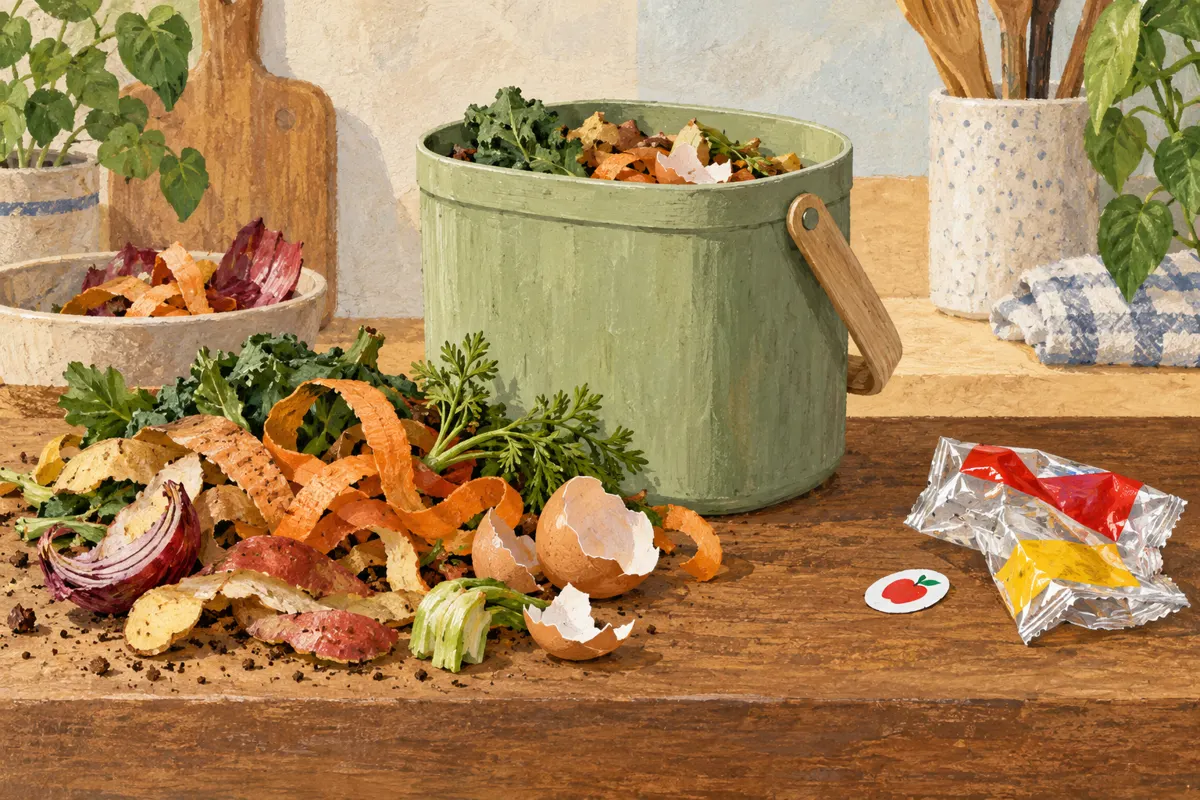
Start with your drop-off program’s accepted-materials list, then collect only those scraps in a reusable container. Remove packaging and produce labels before adding food, keep the container cool to limit odors, and empty it according to the site’s instructions. Rules differ between programs—even between collection sites in the same city.
Check the rules for your exact drop-off
Before collecting scraps, find the instructions for the site you intend to use. Check its accepted materials, opening hours, participation requirements and access instructions. Some programs require registration or a code to unlock bins. Community collection sites may operate on limited schedules, so confirm that yours is open and accepting material before leaving home.
Do not assume that another city’s rules apply in Detroit. The supplied programs illustrate how much acceptance can vary: Chicago excludes all bags, while Boise allows paper bags. New York City’s Smart Composting Bins accept meat and dairy, but most of its community drop-off sites do not. The receiving program’s instructions should guide every sorting decision.
Separate food scraps from items that need checking
Fruit and vegetable scraps, eggshells, coffee grounds, bread, rice and pasta appear on the supplied programs’ accepted lists. Still, check your own site’s list before starting. For items with less consistent acceptance, look for an explicit answer instead of assuming that anything organic belongs in the bin.
- Meat, fish, bones and dairy: accepted by some programs and excluded by others.
- Cooked leftovers, oils and fats: check the site’s rules for prepared food.
- Coffee filters and tea bags: verify whether the program accepts the filter or bag as well as its contents.
- Food-soiled paper, pizza boxes and napkins: do not add them unless specifically accepted.
- Flowers, houseplants and yard waste: these may have different rules from kitchen scraps.
If the list does not answer your question, ask the operator and keep that item out until you have an answer. Acceptance at a commercial composting program also does not establish suitability for a backyard compost bin.
Remove packaging before scraps reach the container
Make unpacking part of food preparation and clearing plates. Empty food from its wrapper, tray or container first, then sort the packaging separately. Plastic, glass and metal should stay out of the food-scrap collection. A compostable label on a cup, fork or bag does not mean your drop-off accepts it: both Chicago and Boise exclude compostable foodware.
- Peel produce stickers off fruit and vegetables before putting peels or trimmings in the container.
- Check scraps for wrappers, ties, rubber bands and other nonfood pieces.
- Keep packaging beside its appropriate waste container while emptying food.
- If something unwanted falls into the scraps, remove it before the next addition covers it.
Use a reusable container and control odors
A reusable food-storage tub, kitchen caddy or reused plastic food container can hold scraps. Collecting directly in the container avoids uncertainty about liners. If you use a liner, follow the receiving program’s rules; you may need to empty the contents and remove the bag at drop-off.
Keep the container where you can easily use it. Refrigerating or freezing scraps helps prevent odors, especially when the program accepts meat, fish or dairy. If your small container fills before your trip, transfer scraps to a larger container with a lid and keep it where animals cannot reach it.
A suggested household routine is to choose a regular drop-off day that fits the site’s schedule. Chicago recommends roughly weekly trips to minimize odors unless scraps are frozen; use that as a planning example and adjust to your storage space and receiving program.
Check the load before emptying it
- Confirm that the site is open and bring any required access code.
- Check the container for packaging, labels and items the program excludes.
- Read the bin signs and empty accepted scraps into the designated collection bin.
- Remove any liner the program does not accept and take your reusable container home.
- Close the bin securely, following its latch or lock instructions.
- Wash your container when you get home so it is ready for the next collection.